
Delhi should keep all its options open in what is essentially a transitional period in the geopolitics of energy rather than remain a gatekeeper serving Trump's 'America First', suggests Ambasssador M K Bhadrakumar.

Sri Lanka has established emergency hotlines and is in close contact with its diplomatic missions in West Asia following escalating tensions in the region. The country is also preparing its airports for potential flight diversions and emergencies.

Earlier in the day, the ministry of external affairs "strongly advised" Indians to avoid travel to Iran until further notice, amid rising tensions and protests in the Islamic Republic.

Egypt, Pakistan, Saudi Arabia and Turkey met in Islamabad in what analysts say is the formal opening of a new diplomatic formation that could reshape the post-war regional order. Their immediate goal is a ceasefire; their larger ambition is to ensure that neither Iran nor Israel emerges from this war in a dominant position. Pakistan's foreign minister then flew directly to Beijing and mooted a Chinese role as guarantor of any eventual agreement. Prem Panicker continues his must read daily blog on the Gulf War.

Rijiju, however, did not specify when and who will give notice for privilege motion against Gandhi. It is believed that someone from treasury benches in the Lok Sabha will do so.

The Union Cabinet has reportedly approved the Kerala government's proposal to officially change the state's name to Keralam, following a resolution passed by the Kerala Assembly.

A Pakistan minister refuted social media reports about the conclusion of the operation against Afghan Taliban, stating that the operation is continuing with full intensity.

The Lok Sabha has revoked the suspension of eight opposition MPs after assurances of maintaining order and decorum in the House. The decision follows a period of disruption and debate over parliamentary conduct.

India has joined the US-led 'Pax Silica' alliance, aimed at building a resilient supply chain for critical minerals and artificial intelligence, marking a significant step in strengthening bilateral ties and fostering economic security.

External Affairs Minister S Jaishankar conveyed a strong message to his Polish counterpart Radoslaw Sikorski regarding terrorism and the Ukraine conflict, emphasizing the need for zero-tolerance towards terrorism and criticizing the selective targeting of India.

Following the death of Iranian sailors in the Indian Ocean, Iran's navy has threatened 'deadly retaliation,' accusing the US of attacking its warship off the coast of Sri Lanka, escalating tensions in the region.

The government's flagship Khelo India programme received an allocation of Rs 924.35 crore.
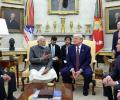
Prime Minister Narendra Modi and US President Donald Trump discussed the Middle East crisis, with a focus on the Strait of Hormuz.

The Registrar General and Census Commissioner of India, Mritunjay Kumar Narayan, has reassured the public that individual data collected during the upcoming census will remain confidential and cannot be used for any purpose other than statistical aggregation.

The escalating conflict involving the U.S. and Israel with Iran has led to widespread disruption in the world of sports, with events postponed, travel plans thrown into chaos, and athletes seeking asylum.
David Perdue said in a post on X that the US-India relationship delivers real results through close cooperation in diverse areas, including defence, energy and through Quad engagement.
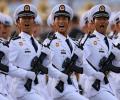
China's latest defence budget surges to $275 billion, fueling its ambitious military modernisation program and intensifying geopolitical dynamics in the region.

A US lawmaker has criticized President Donald Trump's tariff policy on India for purchasing Russian oil, urging him to reverse it immediately.

India's handling of the Iran crisis reflects a growing strain between strategic autonomy and geopolitical alignment, observes Ambassador M K Bhadrakumar.

Prime Minister Narendra Modi spoke with leaders from Oman, Kuwait, and Qatar, expressing concern over attacks in West Asia and discussing the safety of the Indian community.

The Pakistan government has revoked the two-year ban imposed on national hockey team skipper Ammad Shakeel Butt by the Pakistan Hockey Federation (PHF), deeming the ban illegal and unconstitutional. This decision follows Butt's criticism of the PHF's mismanagement during the recent Australia tour, which led to logistical nightmares for the team.

This weekend, Donald Trump has begun to say the quiet part out loud -- that he wants to take control of Iran's oil, a formulation more in line with his robber-baron style of international relations.

Union Minister Pralhad Joshi assures that the Indian government is prepared to bring back Indians stranded in the Gulf region due to the Iran-Israel conflict and disruptions in Dubai, emphasizing citizen safety as the top priority.

'This is a technology that will particularly benefit those who want to take agency over it'.

Dozens of Indian-flagged ships and over a thousand seafarers are stranded in the Persian Gulf, Gulf of Oman, and surrounding areas due to the closure of the Strait of Hormuz amidst ongoing military actions involving the US, Israel, and Iran.

The delegations from the US and Iran head to Islamabad on Friday, carrying a ceasefire that is already fraying, a Strait that is technically open and practically closed, and a negotiating agenda that would challenge even parties actually negotiating in good faith, which these groups are not. Prem Panicker continues his must read blog on the Iran War.

Iran is fighting a different war: Older, slower, and in some ways more dangerous. Iran doesn't need to shoot down an F/A-18. It only needs to make the Strait of Hormuz feel dangerous long enough for insurance markets, shipping companies, and oil futures traders to do the rest. Prem Panicker continues his must-read daily blog on the war in the Middle East.

For weeks, the war skirted the edge of catastrophe without tipping over. Missiles flew, there was much destruction, commanders were assassinated, cities across the Gulf and even in Israel struggled to absorb the shock. But one line held: Energy infrastructure, the arteries of the global economy, remained largely untouched. That is no longer true. Prem Panicker continues his must read daily blog on the Gulf War.

'Was the five-day pause ever meant to hold, or was it simply another instrument of signaling, of positioning, of buying time in a war where even the pauses are tactical?' asks Prem Panicker in his must read daily blog on the Gulf War.
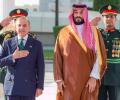
Prime Minister Shehbaz Sharif met with Saudi Crown Prince Mohammed bin Salman to express Pakistan's support for the Kingdom amidst escalating tensions in West Asia, reaffirming their mutual defence pact and commitment to regional stability.

'Many have contributed in terms of gold and silver. Ladies in big numbers have contributed their home belongings and gold.' 'Some have donated their cars too.'

Iran launched retaliatory military strikes targeting Israel and American military bases across the region, including in Qatar, the United Arab Emirates, Kuwait, Bahrain and Jordan.
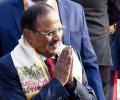
Both countries also committed to formalising cooperation on cybersecurity policy and information sharing on cybersecurity issues.

India has stated it will wait for the outcome of the elections in Bangladesh and the resulting mandate before addressing any existing issues. The country also affirmed its support for free, fair, inclusive, and credible elections in Bangladesh.

India has announced the resumption of tourist visas for Chinese nationals, signaling an effort to improve bilateral relations following border tensions.

The Bihar government has rejected demands to review its prohibition law, which has been in place for a decade, despite concerns raised by members of the ruling NDA about financial losses to the state.

Nepal's Rastriya Swatantra Party is surging ahead in the general elections after Gen Z protests ousted the previous government, signaling a potential new era in Nepali politics.
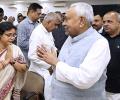
JD-U lawmakers voiced their concerns over Nitish Kumar's move to the Rajya Sabha, while also welcoming the imminent political debut of his son, Nishant, amidst speculation about the future leadership of the state.

Lavrov's comments came two days after Russia accused the US of attempting to prevent India and other countries from buying Russian oil, saying Washington was using a wide range of 'coercive' measures, including tariffs, sanctions and direct prohibitions.

Following an examination and discussions held in the aftermath of the United States' decision to withdraw from dozens of international organisations, Israel's Minister of Foreign Affairs, Gideon Sa'ar, has decided that Jerusalem will immediately sever all contact with several United Nations agencies and international bodies, citing what the government described as persistent bias, politicisation and actions hostile to Israel.
